

Somatic Trauma Therapy in Oregon and Washington
The thing that happened
is over. Your body
didn’t get the memo
Somatic therapy for people carrying trauma, PTSD, or complex trauma — online across Oregon and Washington. We go at the pace your nervous system can actually tolerate.
______________________
REASSURANCE
You already qualify
The quiet worry is usually about not deserving care. Three things that are already true:

_______
No origin story required
If it was ongoing, ordinary, or hard to name, it still counts. Nothing has to qualify first.
_______
Foggy memories welcome
Gaps and blurred timelines are common with trauma. You don’t need a clear account to begin.
_______
You set the pace
We move at the speed your nervous system can actually tolerate. Faster isn’t healing.
Certified Clinical Trauma Professional, Level II
Over a decade of
specialized trauma training
Certified Grief Informed Professional

______________________
WHAT TRAUMA ACTUALLY IS
Trauma isn’t really about the event

You’re functional . That’s the part nobody warns you about. Underneath it, a low hum of bracing, like you’re waiting for a door that already slammed.
_______________________________________________

It’s what survival cost
It’s what your nervous system did to get you through. When that runs for years—complex trauma, or CPTSD—the strategies keep running long after the danger.
_______________________________________________

The protection outlived the threat
The hypervigilance that once kept you safe is now just exhausting, and the numbness that spared you is keeping you from feeling much at all.
_______________________________________________

There is a way through it
This is a known pattern with known ways out. We work with the nervous system holding the story, not just the story.
_______________________________________________
______________________
WHAT THIS CAN LOOK LIKE
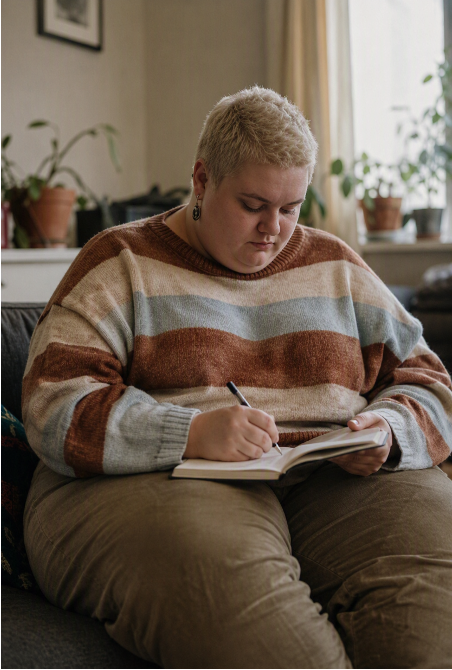
Trauma, in costume
It rarely announces itself. More often it shows up disguised as ordinary problems. Some of the ways it shows up:

“I’m fine until I’m suddenly not”
A tone of voice, a smell, a particular silence and you’re in a reaction three sizes too big for the moment, then embarrassed for an hour.
Sleep that won’t cooperate
Either your brain picks 11pm to review the threat list, or you sleep and wake up just as tired, like rest can’t quite land.
The flinch and the freeze
Conflict makes you go blank, agreeable, or strangely far away. You think of what you wanted to say about four hours later.
Hyper-independence as personality
“I just don’t really need people” because needing people once cost you something, and your body decided never again.Bracing for impact in safe rooms
Your shoulders live near your ears. You scan exits. You read faces for the weather before you read them for anything else.The body keeping the receipts
Stomach issues, tension headaches, a jaw like granite. Workups come back “normal”—the territory our trauma work draws on.______________________
HOW WE WORK HERE
We don’t retell it until it stops hurting

We work with the nervous system holding it—somatic and IFS-informed, with a Gestalt backbone—at the pace your body can tolerate. Faster isn’t healing, it’s speed.
_______________________________________________
Decolonial and anti-oppressive, in practice
Racism, transphobia, ableism, and poverty leave real marks on a nervous system. Your symptoms are often evidence that something was wrong around you.
_______________________________________________
You are the expert on you
You decide what we touch and when. Say “not today,” change your mind, or tell us we missed. We recalibrate rather than double down.
_______________________________________________
Sustainable, not a boot camp
No dramatic breakthrough that leaves you wrecked for a week. Rest, laughter, and feet-on-the-floor moments count as real work, right alongside the grief.
_______________________________________________
You don’t need to tell us the whole story to begin →
______________________
COMMON QUESTIONS
Common questions about trauma therapy
Practical answers about how sessions work, what we do with your history, and whether this is a fit.
-
No. Never on demand, and never before you're ready, if ever.
A lot of people arrive dreading exactly this: that "trauma therapy" means being made to narrate the worst thing that happened to you, in detail, to a stranger, on day one. That's not how this works, and honestly, that approach can do more harm than good. Healing from trauma doesn't require a full retelling. The body holds and releases a lot without a verbatim transcript.
You set the pace and decide what gets said out loud. We can work with how something lives in you now—the bracing, the shutdown, the way your system reacts—without excavating every scene. Some of the most important work happens without the story ever being told in full. You're always the one holding the map.
-
Then you're in excellent company. That doubt is one of the most common things I hear.
Trauma isn't a leaderboard, and there's no severity threshold you have to clear to deserve support. It's less about what happened on paper and more about what it did to your nervous system. Whether an experience overwhelmed your capacity to cope and left a mark on how you feel safe, connected, or at home in your body. That can come from a single obvious event, or from years of smaller things: chronic stress, emotional neglect, growing up othered, the steady weathering of living in systems that weren't built for you. "It wasn't that bad, other people had it worse" is practically the anthem of people who were, in fact, hurt. If it's affecting you, it counts. We can start there without you having to prove anything.
-
Fair question, and I'll give you a straight answer: good trauma work is specifically designed not to blow you open and leave you to cope alone. The old "just relive it until it stops hurting" model is not what we do.
We work at what's called titration—small, tolerable doses, with your window of tolerance as the actual guide, not an afterthought. That means we build safety and resourcing first, opening and closing rituals, go at a pace your system can handle, and back off whenever we need to. You might feel tender after some sessions—that can be part of things shifting—but feeling worse and worse is a signal that we've moved too fast, not a rite of passage, and we adjust. My job is to help you stay regulated enough to heal, not to overwhelm you in the name of progress. You stay in the driver's seat the whole way.
-
The body stuff, very much. Trauma isn't stored as a tidy narrative in your thinking brain. It lives in the nervous system, the muscles, the breath, the flinch. So talking about it, while useful, only goes so far; you can understand your trauma perfectly and still feel it hijack you.
My work is somatic at its core, drawing on somatic trauma frameworks, IFS, and gestalt. That means we pay attention to sensation, activation, and what your body does in real time; building the capacity to notice, tolerate, and move what's been stuck. We'll still talk, of course. But we also work with the part of you that keeps the receipts long after your mind has "moved on." It's not either/or; it's the whole system, included.
-
I'm based in Camas, Washington, and I work entirely through telehealth across both Oregon and Washington. So wherever you are in those two states, you can do this work from your own space.
For trauma work especially, that can matter a great deal: you're in an environment you control, with your own comforts, your own exits, your own dog or blanket or grounding object within reach. No unfamiliar office to brace through first. If you're an Oregon or Washington resident, you're eligible, and there's a free 20-minute consultation to see if we're a good fit before anything begins. No pressure, and no story required to book it.
If you're in crisis right now, you don't have to wait for an appointment. You can reach the 988 Suicide & Crisis Lifeline (call or text 988), or the Trans Lifeline at 877-565-8860, any time.
Still have questions? Click the link below to book a free 20-minute consultation
______________________
ACCEPTING NEW CLIENTS
Ready when you are
You don’t have to have it sorted out, or be able to explain it yet. One free conversation, and you set the pace from there.
Confidential telehealth throughout Oregon and Washington —
Portland, Salem, Eugene, Bend, Seattle, Tacoma, Spokane, Vancouver, and everywhere between.
Trauma rarely travels alone. See neurodivergent-affirming and gender-affirming therapy →