

30-hour clinical supervision training for Oregon clinicians
Clinical Supervision
Without the Power Trip
Supervise with clarity, practical tools, and care.
First Cohort: January 8th - February 12th, 2027
What this training prepares you to do
Build a supervision framework
Connect supervision theory to everyday practice.Handle feedback and accountability
Give clear feedback and respond to concerns.Supervise with attention to power and access
Build an affirming, accessible supervision practice.Oregon Supervisor
Candidate Preparation
Designed to meet OBLPCT’s 30-clock-hour post-master’s supervision training requirement for eligible Supervisor Candidates.
Candidates also need an active Oregon LPC or LMFT license and a passing law and rules exam. Other requirements apply.
Source: Oregon Become a Supervisor page______________________
COURSE AT A GLANCE
30
clock hours
Live
online
6
weekly sessions • 5 hrs each
12
participants maximum
Who this training is for
For Oregon LPCs and LMFTs preparing to become Supervisor Candidates, and licensed clinicians starting or strengthening their supervision practice.
A good fit if you want . . .
Relational supervision
Ethical, relational supervision with clear boundaries and practical skills.
Practical tools
Templates to organize superivsion and put your values into practice.
Culturally responsive practice
Culturally responsive, decolonial, liberation-centered practice that supports marginalized clinicians.
How you’ll participate
Attend live and take part in role-play, feedback practice, and applied documentation.
Examine power, identity, privilege, oppression, and institutional harm.
This is not a self-paced course. It provides no legal advice or licensure approval guarantee.
Our approach affirms queer, trans, neurodivergent, disabled, fat, BIPOC, immigrant, and low-income clinicians without asking them to do all the teaching.
Why this training exists
Supervision can reproduce harm, repair it, or leave it unspoken.
“I need to give you some feedback,” without dissociating into a spreadsheet.
Real responsibility
Protect clients and support supervisee growth through clear evaluation and accountability.
Ground culturally responsive supervision in an honest understanding of power.
Power-aware practice
Practice difficult conversations about feedback, identity, money, risk, and repair.
Room for the hard parts
Supervisor responsibilities: Oregon Supervisor Checklist PDF______________________
12 Participants Maximum

Small by design
Time to practice
Rehearse feedback and role-play. Bring cases for consultation.
Individual feedback
Get feedback on draft documents and questions specific to your setting.
Room to participate
Build trust for honest conversations, with space to pause, process, and re-enter.
______________________
MEET YOUR INSTRUCTOR
Del Knight
PsyD, LPC, LMHC, NCC, ACS
they/them. Clinician, supervisor, and educator.
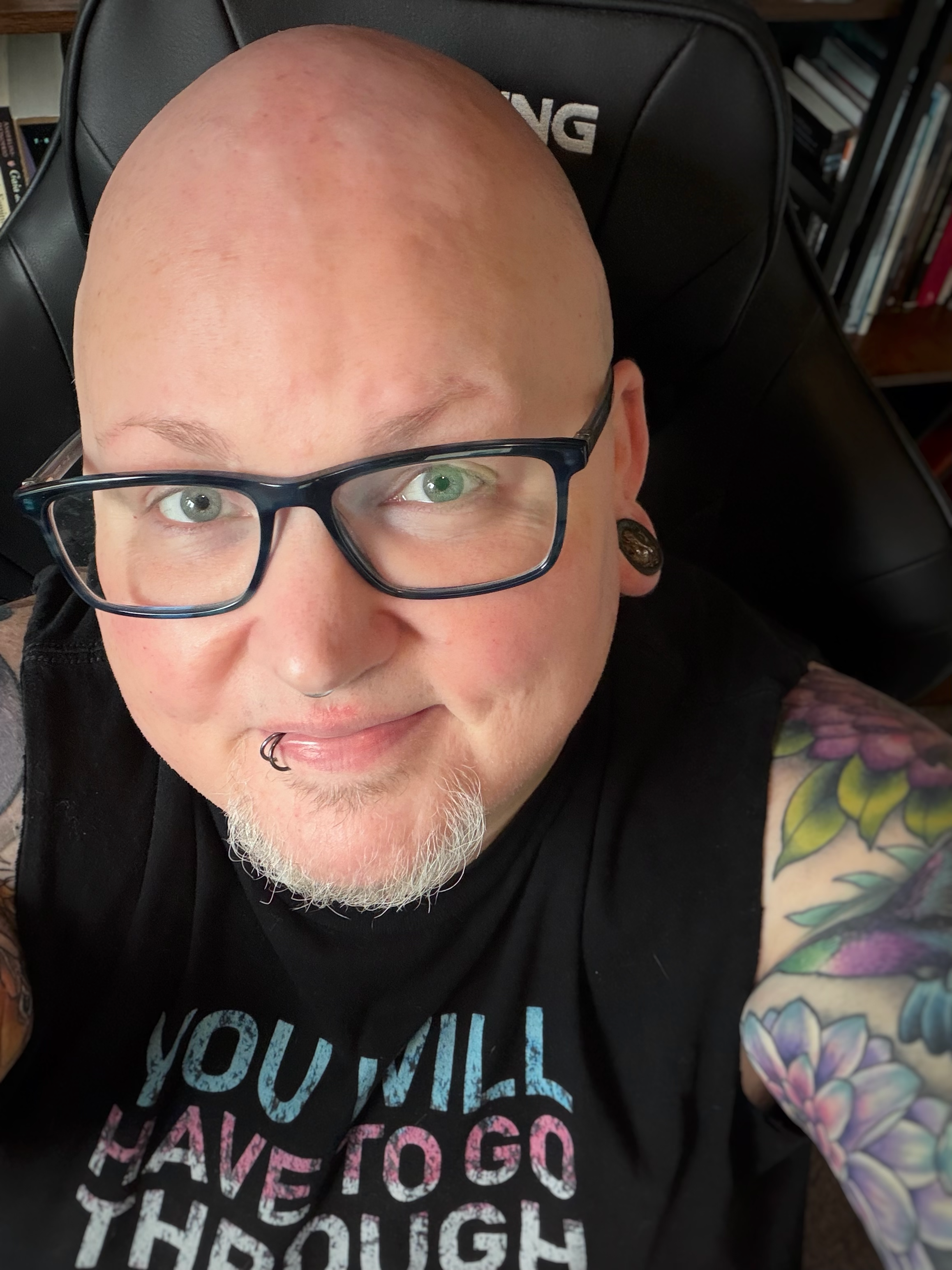
Del has experience supervising prelicensed clinicians and developing training programs.
Their approach centers somatic practice, LGBTQ+ and trans affirmation, neurodivergent access, and body liberation.
Warm, structured, and grounded in real practice.
What you’ll learn
Supervision foundations
Oregon requirements and practice
Identify the 30-clock-hour training requirement and Supervisor Candidate steps. Apply Oregon guidance to plans, monthly tracking, group boundaries, documentation, evaluation, and remediation.
Supervision models
Compare developmental, discrimination, competency-based, reflective, and systems-informed models.
Agreements and documentation
Draft agreements, informed consent, learning plans, and supervision files.
Supervisor roles
Practice when to teach, consult, support, evaluate, gatekeep, advocate, mentor, model, document, and seek consultation.
Oregon references: OBLPCT Become a Supervisor page; Oregon Supervisor Checklist PDFSupervision in practice
Feedback and recognizing concerns
Give timely, specific, behaviorally anchored, culturally responsive feedback tied to client welfare. Distinguish developmental needs from competence, ethics, impairment, and safety concerns.
Power and liberation
Examine power, oppression, privilege, coloniality, and institutional norms.
Remediation planning
Draft plans naming the concern, standard, impact, required change, support, timeline, evidence of progress, and consequences.
Accessible supervision
Design for neurodivergent access, disability justice, body liberation, LGBTQ+ and trans affirmation, and collaborative repair.
Your supervision starter packet
Provided templates and drafts you develop during the course to help you set up and run your supervision practice.
Supervision approach
Supervision values and theory statements
Setup and documentation
Oregon compliance checklist
Supervision agreement draft and informed consent language
Monthly supervision tracker and note template
Feedback and remediation
Feedback script and evaluation rubric
Remediation plan template
Implementation and support
First-90-days implementation plan
Consultation and supervision-of-supervision map
The six-week course
-
Foundations, roles, and the supervision relationship
We start with why supervision exists: to protect clients, develop supervisees, fulfill licensure requirements and form professional identity. We also cover what supervision isn’t, namely therapy, consultation, a staff meeting or a training seminar with a clipboard. You’ll get an overview of Oregon’s Supervisor Candidate and Approved Supervisor pathways, and we’ll start mapping power from the very first email with a potential supervisee.Activities: a role-sorting exercise (supervision, therapy, consultation, staff meeting or training?), a supervisor roles map of the roles you know well, avoid and overuse, a supervision values inventory, and a power map of a first contact: who chooses, who pays, who evaluates, and who gets believed if there’s conflict.
-
Oregon compliance, contracts, informed consent, and supervision plans
This is paperwork week, taught as care rather than punishment. We turn Oregon’s requirements into a working system: what has to happen before an associate starts practicing, what happens every month, and what happens annually and at the end. We also cover plan approval, title use, informed consent, the limits of supervisee confidentiality, group supervision rules, and what goes in a supervision file.Activities: building a four-part Oregon compliance checklist, reviewing sample associate bios for title problems, drafting the first sections of your supervision agreement, writing a confidentiality script in your own voice, working through monthly supervision math scenarios, and writing a supervision note from a risk scenario.
-
Supervision theory, roles in action, and clinical skill development
We treat theory as a decision-making tool, not a decorative citation garden. We compare developmental, discrimination, competency-based, reflective and systems-informed models, and practice choosing a role based on what the supervisee, the client and the moment need. We also cover active methods that go beyond case discussion, plus parallel process and how to use somatic and relational information ethically.Activities: matching models to scenarios, role-selection practice, role-play, modeling and direct-observation planning, a somatic supervisor pause (noticing urgency, rescue impulses and defensiveness before you respond), and a lab where you draft your supervision theory statement.
-
Decolonial, liberatory, and culturally responsive supervision
This week treats culturally responsive supervision as part of competence, not an optional values add-on. We cover power, coloniality, liberation psychology, cultural humility, and LGBTQ+, trans, neurodivergent and body-liberatory supervision. We also work on how to repair after you cause harm, because you will, and that’s where the skill is.Activities: rewriting deficit-based case questions (“Why is the client noncompliant?” becomes “What is this client adapting to?”), practicing broaching conversations in pairs, a liberation-lens case consultation, an accessibility audit of your supervision structure, repair practice after realistic missteps, and adding culture, power and access language to your supervision agreement.
-
Ethics, feedback, evaluation, remediation, and gatekeeping
Avoiding feedback is not kindness. This week covers how to evaluate clearly, give feedback early, tell developmental concerns apart from competence, ethical, impairment and safety concerns, write remediation plans people can actually follow, and gatekeep with dignity. We also cover when to consult and when to notify the Board.Activities: sorting concerns by type, practicing feedback with a step-by-step formula, drafting a remediation plan, rewriting a supervision note that has more feelings than facts, and gatekeeping role-plays in triads with supervisor, supervisee and observer roles.
-
Integration, capstone, implementation, and next steps
The last week pulls everything together. Each participant gives a five-minute capstone presentation on their supervision approach, followed by five minutes of peer consultation. Then we plan your first 90 days as a supervisor and map out your ongoing consultation and supervision-of-supervision support. You’ll also get certificate instructions and hear about the optional supervision-of-supervision consultation group. Thirty hours is a foundation, not a personality transplant.Activities: capstone presentations and peer consultation, first-90-days implementation planning, consultation network mapping, course evaluation, and a closing ritual.
-
Yes, but it’s manageable. Most weeks you’ll revise or draft a piece of your supervision starter packet, such as your values statement, supervision agreement, monthly tracker or feedback script, and bring a de-identified or imagined scenario to work with. You don’t need to bring polished drafts. Something real enough to work on is the goal.
-
You’ll be invited to, never surprised into it. Every skills practice comes with written instructions, choices about which role to take, and the option to observe. Observing counts as participating.
Oregon requirements and course completion
Training
requirement
Designed to meet OBLPCT’s 30-clock-hour post-master’s supervision training requirement for eligible Supervisor Candidates.
Continuing
education
OBLPCT does not pre-review or pre-approve CE programs or providers. “Designed to meet” does not mean Board-approved.
Completion and
limitations
Complete attendance and course requirements to receive documentation of 30 clock hours. The course provides no legal advice and guarantees neither candidate, licensure, Board, employer, nor insurance-panel approval.
Before you enroll
Training is one part of the pathway. Check current eligibility, forms, deadlines, and licensure requirements directly with OBLPCT.
Sources: Oregon Become a Supervisor and Continuing Education pages
Green Bottle Pricing
Choose the highest rate you can pay without harm. Higher tiers help fund reduced-rate seats.
Pay-It-Forward
$725
one paymentor 3 payments of $245 ($735 total)
Full Jar
Your needs are comfortably met, you have financial support or reimbursement, or you want to fund access.
True Cost
$625
one paymentor 3 payments of $215 ($645 total)
Full Jar
You can cover the full course cost without hardship.
Supported Access
$400
one paymentor 3 payments of $135 ($405 total)
Low Jar
The full rate would cause strain or prevent attendance. Limited availability.
Payment plans available at time of registration. Reduced-rate seats are part of the course design.
Employer reimbursement? Please select either True Cost or Pay-It-Forward.
Inspired by Alexis J. Cunningfolk’s Green Bottle model (Worts & Cunning).Accessibility and participation
Learning includes discussion, reflection, skills practice, and small-group consultation.
Access options may include
Participation flexibility
Camera flexibility when clinically and pedagogically appropriate. Role-play alternatives or modifications as needed. Permission to move, stim, stretch, eat, or hydrate.
Clear agendas and written instructions, written templates and examples, and breaks during each session.
Materials and pacing
Discussion norms that support consent, humility, accountability, and repair. Participate in ways that support your access needs and cultural safety.
Discussion and safety
Tell us what helps you participate
Contact us before the course begins at info@somarootstherapy.com
COMMON QUESTIONS
Before you join the cohort
-
The course meets live on Zoom for six Fridays in a row, January 8 through February 12, 2027, from 8:00 AM to 1:00 PM Pacific. That’s five hours a week for six weeks, or 30 clock hours. The dates are January 8, 15, 22 and 29, and February 5 and 12.
-
You need to attend all six sessions, start to finish. OBLPCT requires 30 clock hours of post-master’s supervision training, and the course is exactly 30 hours, so there’s no spare time to absorb an absence. Before you register, please check that all six Friday mornings are open, including the ones you usually keep for something else. If an emergency comes up during the course, email info@somarootstherapy.com as soon as you can.
-
Yes. If you attend all six sessions and finish the course requirements, Soma Roots Therapy will give you a certificate of completion. It lists the course title, instructor, course dates, live online format and 30 clock hours. You’ll get instructions for the certificate in the final session. Keep it with your professional records, because it’s your proof of the training hours when you apply as a Supervisor Candidate.
-
Yes. The course is fully online, so you can join from anywhere with a stable internet connection, as long as you can be present at 8:00 AM Pacific. If you’re an Oregon LPC or LMFT who lives outside the state, the course is designed to meet OBLPCT’s 30-clock-hour requirement wherever you log in from. If you’re licensed in Washington or another state, keep in mind that the content is built around Oregon’s rules, and it’s up to you to check whether it meets your own board’s requirements.
-
You can get a refund up to 48 hours before the course starts, which means by 8:00 AM Pacific on Wednesday, January 6, 2027. That’s when participants receive the Clinical Supervision Without the Power Trip Participant Workbook and their course platform link. Refunds aren’t available after that. With only 12 seats per cohort, a late cancellation is hard to fill. If you can’t attend, please email info@somarootstherapy.com as soon as possible.
30 CLOCK HOURS • LIVE ONLINE • A MAXIMUM OF 12 PARTICIPANTS