

Staying Informed Without Burning Out
Staying sociopolitically informed matters—especially when your communities are directly impacted—but so does having a nervous system that isn’t stuck in fight-or-flight. Sustainable engagement doesn’t sacrifice your health.

What Neurodivergent-Affirming Therapy Actually Looks Like
Not the version with a rainbow infinity symbol on the homepage. The version built from the ground up around how divergent brains actually process, mask, and heal.
What Trauma-Informed Actually Means
Trauma-informed therapy isn't a vibe or a vocabulary list. A licensed psychotherapist breaks down SAMHSA's six principles — and what's being sold instead.

Not All Trauma Looks The Same
If you've ever told yourself "nothing that bad happened to me" — this one's for you. Complex trauma rarely looks like the dramatic origin story we've been taught to expect. Licensed psychotherapist Del Knight, CCTP-II, unpacks what trauma actually is, why it lives in the body, and why the question "was it really trauma?" is almost never about the facts.

Your Body Is Not A Problem To Solve
What is body trust? Del Knight, PsyD, LPC, LMHC, a Certified Body Trust Specialist explains the framework, why diet culture isn't working, and how to stop fighting your body.

What Actually Happens in a First Therapy Session
Wondering what happens in a first therapy session? Here's what you don't need to have figured out — and what you're allowed to expect. No performance required.

‘It Could Be Worse’
The pain doesn’t go away because you told it other people have it worse. It goes underground—into your jaw, shoulders, baseline fatigue. Pain minimization isn’t perspective; it’s self-abandonment.
Slow Therapy for Exhausted Humans
Slow therapy isn’t passive—it’s therapy that respects the nervous system’s actual timeline, not the calendar’s. Your pace is not a character flaw. Going gently is not the same as avoiding. There’s no rush.

Your Nervous System Isn't Broken
Your nervous system isn’t broken—it’s doing exactly what it was built to do. What gets labeled as “too much” is often a system responding brilliantly to overwhelm, noticing more, feeling more, processing more.

Chronic Vigilance Is a Trauma Response
That’s what happens when a system trains you to equate stillness with danger or failure. Chronic vigilance isn’t a personality flaw—it’s your nervous system doing what it learned to do to keep you safe.

Emotions Without “Good” or “Bad”: Making Room for the Whole Spectrum
No emotion is morally good or bad—they’re messengers from your nervous system. Learn to feel what you feel without piling judgment on top. All of you is welcome.

What To Ask In A Free 20-Minute Consultation
Shopping for a therapist isn’t being “too picky”—it’s finding a fit that works. Your free consultation is an invitation to ask real questions, not a sales pitch.
Gender Euphoria, Not Just Dysphoria: Finding Home in a Queer and Trans Body
Gender euphoria isn’t always cinematic—sometimes it’s laughing about how right your new shoes feel, or realizing you didn’t think about your chest for a whole hour. Trans & queer affirming therapy that centers joy, not just pain.
Decolonizing Healing: Your Body Is Not A Project
You are not a project; you are a person in process—already worthy, already whole. Decolonizing healing means reclaiming your right to define what healing looks like on your own terms, in your own body

Therapy for the ‘Too Much’ and ‘Too Sensitive’ Crew
What gets labeled as “too much” is often a nervous system doing exactly what it was built to do—notice more, feel more, process more. Your sensitivity isn’t a flaw; it’s your superpower. Soma Roots Therapy offers therapy that gets it.
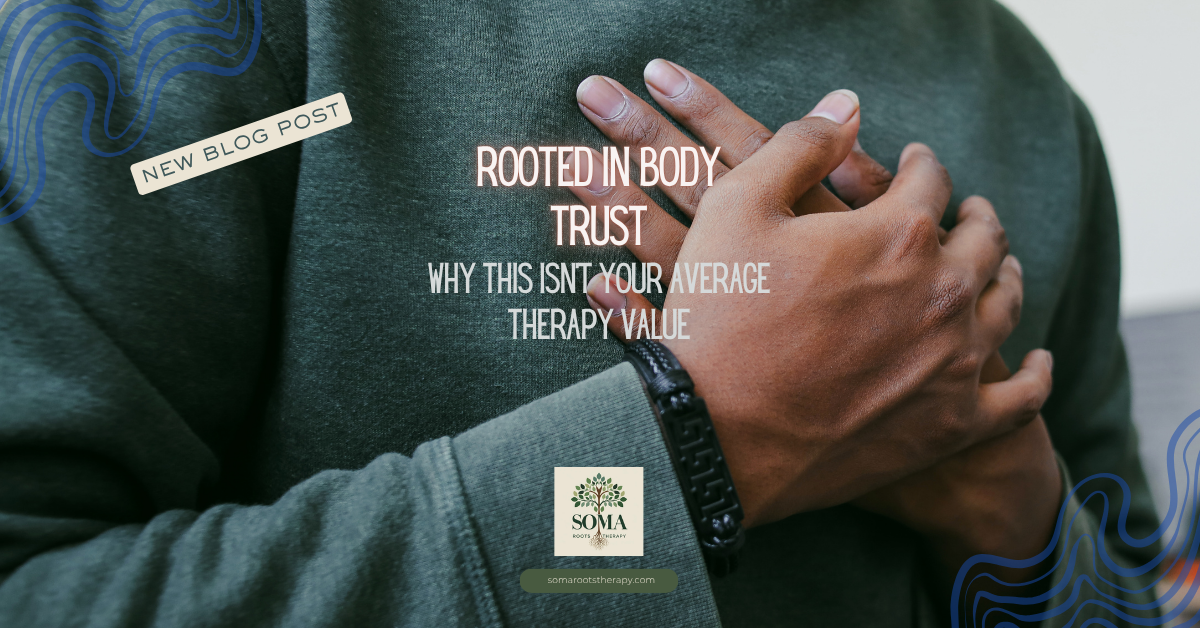
Rooted in Body Trust: Why This Isn’t Your Average Therapy Value
Body trust is the foundation of our somatic therapy for LGBTQ+ and neurodivergent folks. Learn why this value shapes everything we do at Soma Roots Therapy.

Introducing Soma Roots Therapy: A New Chapter (with a Lot of Plot Twists)
Meet Soma Roots Therapy: a radically affirming space for body-centered healing. We serve LGBTQ+ and neurodivergent communities across Oregon and Washington with somatic, decolonial care.